Ask ten Montreal dog owners whether their dog needs boots and you will get ten confident answers, most of them opposite. Some swear boots are the only thing that gets their dog through a salted February. Others tried one pair, watched their dog high-step around the hallway like a circus act, fished a boot out of a snowbank, and never tried again. So do dogs need boots in winter? The honest answer is that some do, some do not, and the difference is not the dog’s toughness — it is the route, the salt, and the dog’s own paws. This post is the skeptic’s version: when boots earn their keep, when a tub of balm is genuinely enough, and how to tell which camp your dog is in before you spend the money.
A note on links: Some links in this post are affiliate links. As an Amazon Associate I earn from qualifying purchases — buy through one of these links and we receive a small commission, at no extra cost to you. It’s one of the ways this blog pays for itself. We only link to products we would genuinely recommend, and only to things we don’t sell ourselves.
Start with the route, not the dog
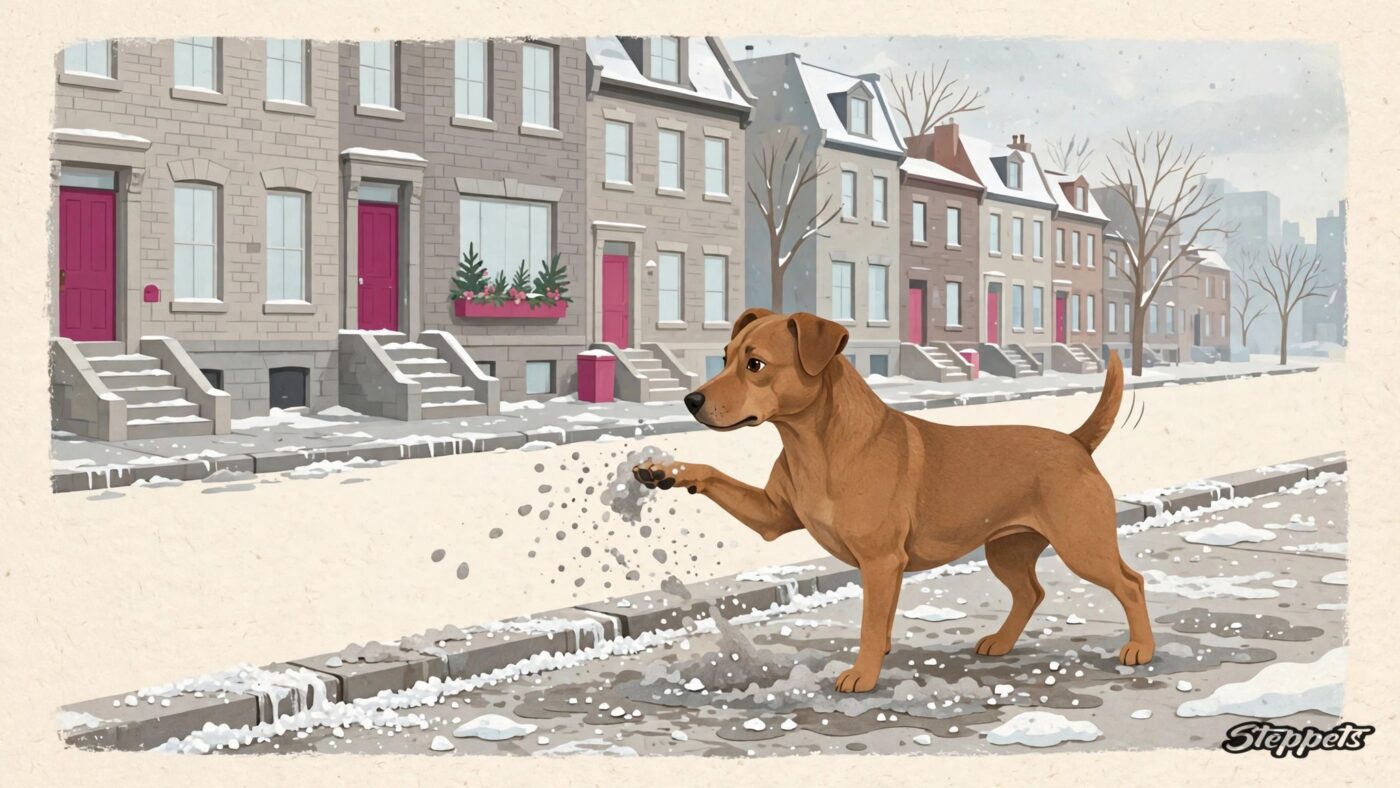
The question is usually framed as a property of the dog — tough breed, delicate breed, old dog, puppy — and that framing misleads. The same dog can need boots on one street and not need them on another, because what hurts paws is mostly what is on the ground. Heavily salted arterial sidewalks, intersections where brine pools at the curb, and the gritty slush outside shops are the hard end of the scale. Packed-snow park paths, quiet side streets, and your own yard are the easy end. A dog walked mostly on packed snow may never need boots at all. A dog walked twice a day down a salted main street in January probably does.
That is the first test, and it costs nothing: walk your normal route and look at what is underfoot. If the sidewalks are white with salt, if there are puddles of grey slush at every crossing, if your dog starts lifting paws or trying to walk on the snow at the edge instead of the sidewalk, the ground is telling you something. If the route is mostly snow and your dog trots through it happily, balm and a rinse at the door may be the whole system. Boots are a tool for a specific ground problem, not a winter uniform.
When boots are worth it
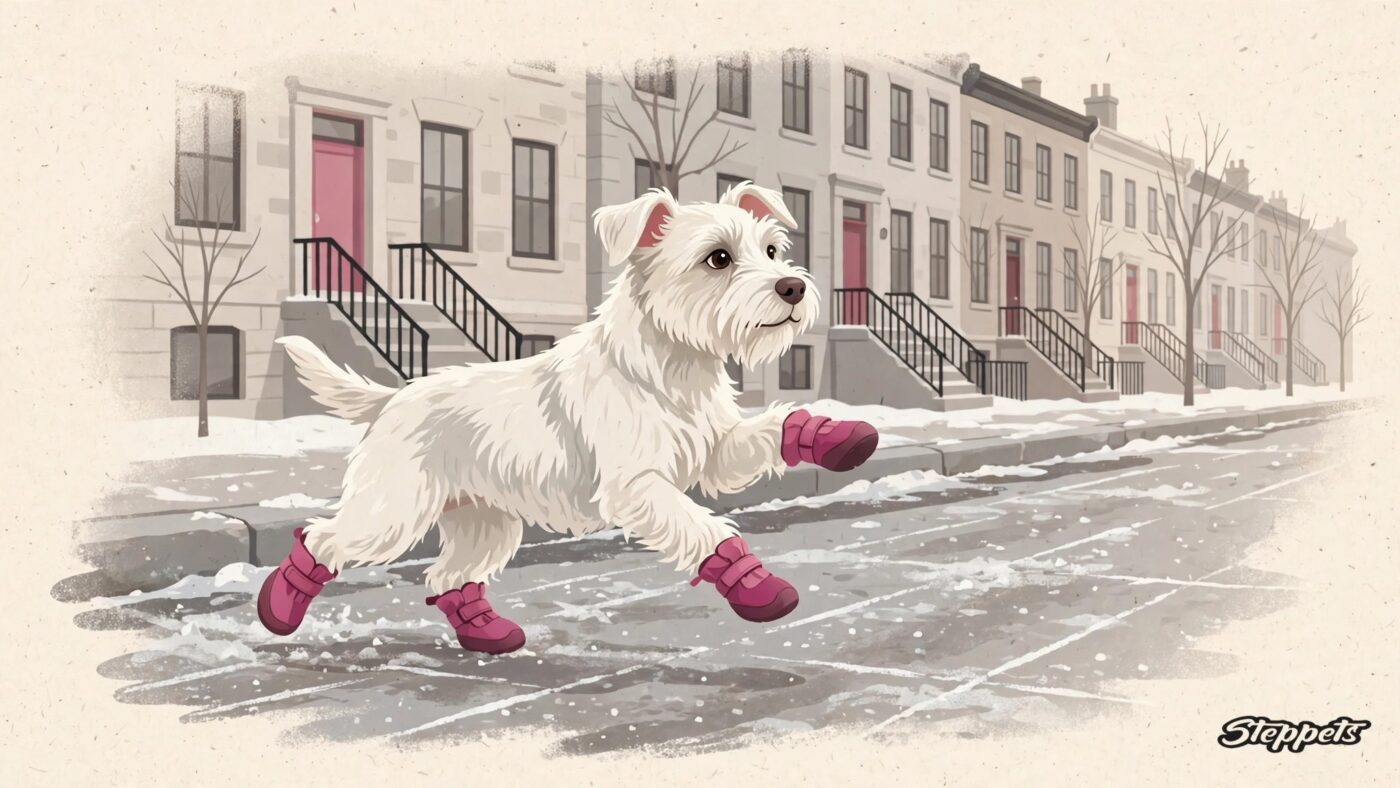
Boots earn their keep in four situations, and they are easy to recognise once you name them. The first is heavy salt: routes where de-icer is thick every day, and no amount of balm survives the walk. The second is pads that are already damaged — cracked, dry, or healing — where salt in a fresh crack stings with every step and every walk sets the healing back. The third is the determined licker: a dog who licks any barrier off before you are off your own street, and then licks the salt off his paws all evening. A physical barrier he cannot lick through solves a problem balm cannot. The fourth is ice: a treaded sole with real grip gives a dog footing on glazed sidewalks that bare pads, however tough, simply do not have.
There is also a quiet fifth case, the one owners discover by accident: the dog who used to love winter walks and now plants his feet at the door. Cold paws, salt sting, and a coat that binds are all on the list of physical causes, and boots are one of the cheapest things to test. If the refusal clears up the day the boots go on, you have your answer — and it was never stubbornness. Our guide to road salt, ice balls and winter paws works through the whole paw system, salt included, if you want the fuller picture.
When balm is enough — and it often is
For many dogs, on many routes, a wax-based balm is the better answer, and the skeptic should say so plainly. Balm is a barrier you apply at the door: a wax-based paw balm (affiliate link), worked into the pads and between the toes in a layer you can actually see, keeps salt from sitting directly on the skin and gives packed snow less to grip. Look for a pet-grade balm with lick-safe ingredients — your dog will lick some of it off no matter what you do — and one that stays put in the cold rather than going brittle. Apply it at the door, not twenty minutes early on the rug, and reapply on long walks.
Balm wins when the route is moderate, the pads are healthy, and the dog tolerates it. It wins on cost, on simplicity, and on the fact that there is nothing to lose in a snowbank. It loses when the salt is heavy, when the pads are already cracked, or when the dog licks it off faster than it can work. That is not a failure of balm; it is balm reaching the edge of what a thin barrier can do. The honest system is layered: balm for ordinary days, boots for the worst streets, and a rinse at the door every time either way. Salt has to come off at home, because what stays on the pads keeps drying them and keeps getting licked.
The skeptic’s case against boots, fairly stated
Boots have real drawbacks, and a guide that hides them is a sales pitch, not advice. Most dogs hate boots at first. Expect the hallway high-step, the betrayed stare, and a dog who walks as though the floor has become unreliable. That passes for most dogs within a few days of short indoor sessions — but not for all of them, and a dog who gives boots a genuine trial and still votes no is telling you something worth hearing.
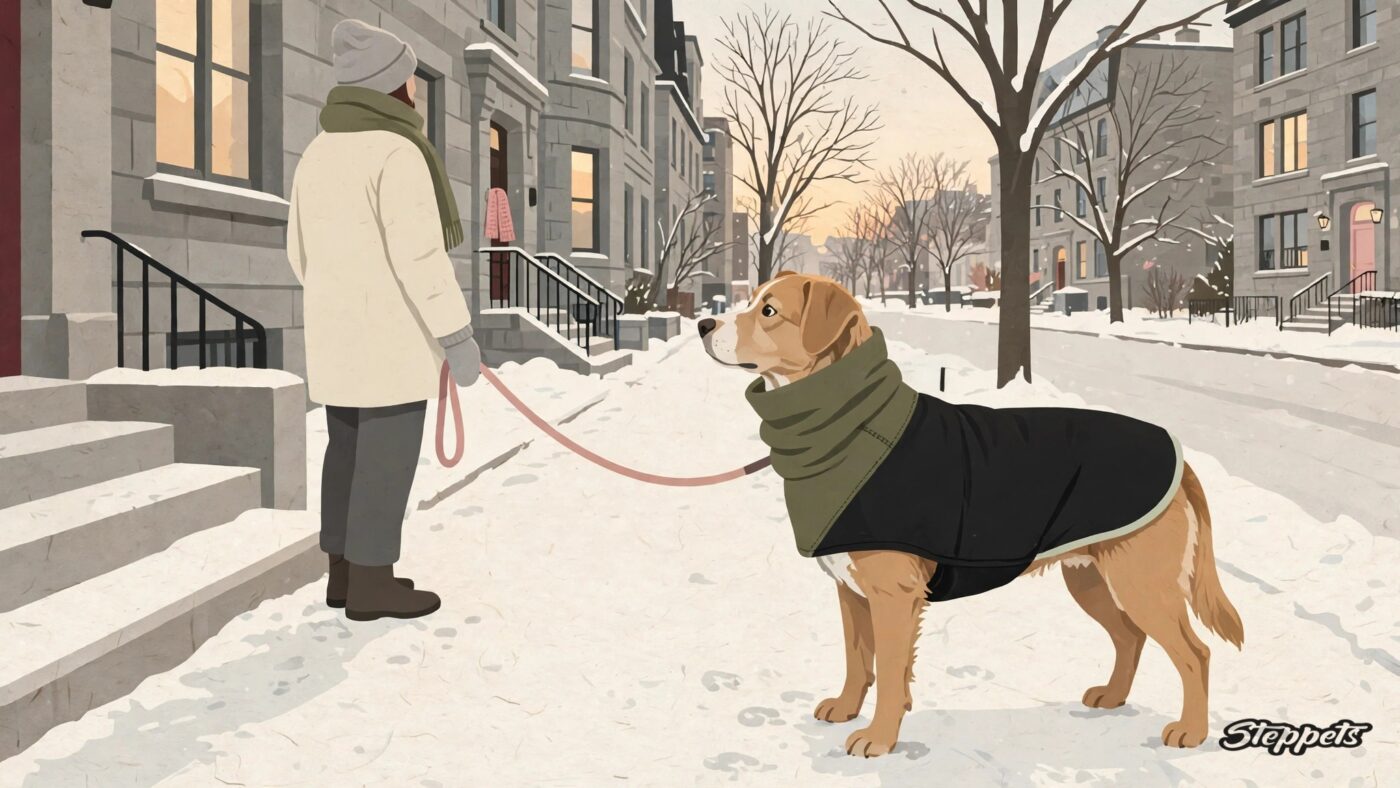
Cheap boots are the other problem. A boot that falls off in slush is worse than no boot, because now you are carrying a wet dog and searching a snowbank, and a dog who has lost a boot mid-walk has one bare paw on the saltiest stretch of the route. Single-strap boots are the ones owners find in snowbanks. And boots do nothing for the rest of the dog: they do not keep a short-coated dog warm in wind, they do not dry a wet coat, and they do not replace the coat at all. On the coldest days, the limit is the air itself, and our guide to how cold is too cold for a dog works through the temperature bands for those mornings. Boots cover the ground floor only — which is exactly why they pair with a coat rather than replacing one.
Getting boots to stay on: sizing is the whole game
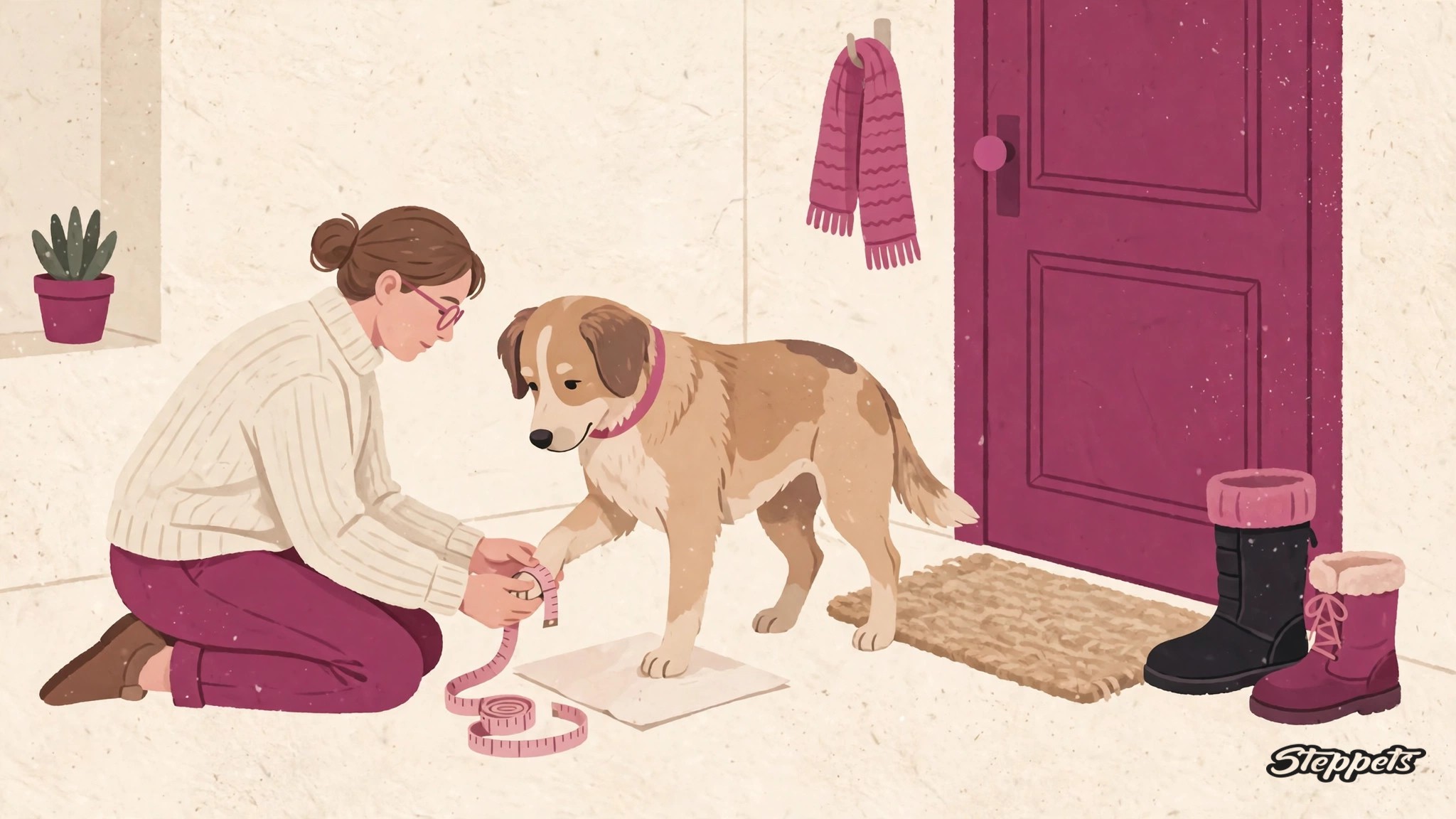
Fit is where boots succeed or fail, and fit is where sizes lie. Do not order your dog’s usual “medium.” Measure the paw with his weight on it, in centimetres, standing on a piece of paper, and match the maker’s chart rather than the size label. Paws spread under weight, and a boot measured on a lifted paw will be too tight on a walking one. Measure all four — front and back paws are often different sizes — and if the dog falls between sizes, size up; a boot that is slightly roomy stays on better than one that pinches, and a tight boot is the one a dog works hardest to kick off.
Within boots, choose a double-strap closure that stays on in slush and a treaded sole with real grip for ice (affiliate link) rather than a smooth fashion sole. Two straps distribute the hold and give you a second chance when the first loosens in wet snow; a treaded sole is the difference between grip and skating on a glazed sidewalk. Check the closure every time you put them on — straps loosen as the boot warms and the fur compresses — and carry a spare in a pocket on long walks, because the day a boot comes off is the day you will be glad you did. It is the same discipline as measuring for anything a dog wears: measure, don’t guess. Our guide to how to measure a dog for a coat is about coats, but the principle transfers exactly.
Teaching a dog to wear them without a standoff
The acclimation protocol is short, boring, and it works. A few minutes indoors with treats, then a short outing, building up over days — not a first fitting at the door in a storm. Day one, boots on in the kitchen, treats for standing in them, boots off. Day two, a lap of the hallway and the yard. Day three, a short block. Most dogs stop high-stepping by the second or third outing; the ones who do not are usually objecting to the fit, not the idea, and a different size or a softer boot is worth trying before you give up.
Two mistakes undo the whole thing. The first is making the first boot walk a long one in bad weather — the dog associates boots with the worst walk of the season, and the refusal that follows is about the memory, not the boots. The second is laughing at the high-step. It is funny, and the dog does not care that you are laughing, but what he needs in that moment is a treat and a short, successful walk, not an audience. Keep the first week boring and the walks short, and by the second week the boots are just part of getting dressed.
The verdict, by dog
So, do dogs need boots in winter? If your dog walks salted streets daily, has cracked or healing pads, licks every barrier off, or slips on ice — yes, boots are worth it, and the right pair with a double-strap closure and a treaded sole will pay for itself in walks that actually happen. If your route is mostly packed snow, the pads are healthy, and the dog tolerates balm — no, balm plus the two-minute rinse at the door is a legitimate system, not a compromise, and you can spend the boot money elsewhere.
And if you are still not sure, run the cheapest experiment in the book: balm and the door rinse for a week, watching the paws after every walk. Pads staying supple and the dog walking happily means the system works. Pads drying and cracking, paws lifted on salted stretches, or a dog who starts refusing at the door means the ground has outgrown balm, and boots are the next step. If a paw is consistently the sore one, if there is bleeding, blistering, or a limp that does not clear up after a day off the salt, that is not a gear question any more — call your veterinarian before the next walk, boots or no boots.
Winter in Montreal is five months of ground that changes underfoot every week. The dogs who do best in it are not the toughest ones or the best-equipped ones. They are the ones whose owners read the ground, match the protection to the day, and change it when the day changes. Some days that is balm. Some days it is boots. Knowing which day is which is the whole skill — and it is a cheaper skill than either product.