Montreal winter doesn’t ease you in. One week you’re walking your dog in a light jacket under fall colours; the next, it’s −18°C before breakfast, the sidewalk is a skating rink glazed with salt, and it’s dark by the time most people get home from work. Your dog still needs to go outside — to relieve himself, to move, to sniff his way through the neighbourhood news. So every Montreal dog owner ends up standing at the door, leash in hand, asking the same question: how cold is too cold for a dog?
A note on links: some links in this article are affiliate links. As an Amazon Associate I earn from qualifying purchases — you pay the same price, and it helps keep Steppets running.
There isn’t one number, and anyone who gives you a single magic temperature is skipping the interesting part. But there are workable bands, clear warning signs, and local hazards worth knowing about. This guide walks through all of it the way we’d explain it to a neighbour: honestly, specifically, and with Quebec winter — not winter in general — in mind.
The honest answer: it depends, and here’s what it depends on
Dogs are not small humans in fur coats, and they are not all built alike. A Malamute and a Miniature Pinscher standing on the same frozen sidewalk are having two completely different days. How cold a dog can comfortably be depends on his coat, his size, his age, his health, and the weather itself — wind and wet matter as much as the number on the thermometer.
Two forces do most of the damage. Wind strips away the layer of warmed air a dog’s coat traps against his body, which is why a windy −8°C can chill a dog faster than a calm −15°C. Wet is worse: a soaked coat loses most of its insulating power, so freezing rain or slush at −1°C can be genuinely risky for a small or short-coated dog even though the temperature sounds mild. Dry, calm cold is the easiest kind of cold for a dog to handle; wind and wet move every dog up a risk band.
The temperature bands below are general care guidance — the framework most vets and cold-climate trainers work from — not a substitute for knowing your own dog. If your dog has a medical condition, is very young, or is a senior, your veterinarian’s advice for his situation comes first.
How cold is too cold for a dog?
For most healthy adult dogs, walks are business as usual around 0°C. Around −7°C, small, lean, short-coated, young and senior dogs need adjusting — shorter walks and closer attention. Below roughly −12°C, most dogs should have protection and a short, purposeful outing, and at −20°C and below nearly every dog should be outside for minutes only.
Temperature bands: a general guide for winter walks
Around 0°C — business as usual, with one exception
At freezing point, most healthy adult dogs are perfectly comfortable on normal walks. Hardy and double-coated breeds barely register it. The exception is wet: rain, wet snow, or slush at this temperature soaks coats and chills small, lean, and short-coated dogs faster than colder dry weather would. If your dog comes home wet at 0°C, dry him properly — especially the chest, belly, and paws.
Around −7°C — the caution zone for vulnerable dogs
This is where owners of small breeds, lean dogs, single-coated breeds, puppies, and seniors should start adjusting: shorter walks, an extra layer for the dogs who need one, and closer attention to paws on frozen ground. Big, well-coated dogs are usually still in their element here. The split between “fine” and “too much” at −7°C is almost entirely about the individual dog, which the next section unpacks.
Around −12°C — shorten the walk, protect the dog
Below roughly −12°C, most dogs do better with protection and a purpose: out, business done, a brisk loop, home. Ears, tail tips, and paws have less circulation than the core and are the first places frostbite threatens, and the risk grows with exposure time and wind. Vulnerable dogs — small, old, thin, short-coated — should be on bathroom-break schedules rather than adventures. Cold-hardy breeds can still enjoy a real walk, but “cold-hardy” is not “cold-proof”: watch them the same way.
Can dogs get frostbite?
Yes. Ears, tail tips and paws are the first places frostbite threatens, because they have less circulation than the core. The risk grows with exposure time and wind, and it rises sharply below roughly −12°C — which is why walks at that temperature should be short and purposeful rather than adventures.
−20°C and below — stay home weather
At −20°C and colder, the honest answer for almost every dog is: minutes, not walks. Short, protected outings for the toilet, then back inside for play, training games, and puzzle feeders. Even northern breeds have limits, and Montreal adds wind on top of these numbers — a −20°C reading with a river wind is a much colder day than the forecast suggests. Nobody’s fitness plan is worth frostbitten ears.
What moves a dog between the bands
Coat type is the biggest factor. A double coat — a dense undercoat under longer guard hairs, like a Husky’s or a Golden’s — traps warm air and sheds snow. A single short coat does almost none of that. Our own dog, Luna, is a Basenji: a breed from Africa with a short, fine, single coat and very little body fat. She starts shivering at temperatures a Husky would consider a pleasant spring day, and she’s the reason our workshop exists — the first Steppets coat was sewn for her. If your dog is a sighthound, a Dachshund, a Chihuahua, or any short-coated breed, read the bands above one step colder.
Size and build matter. Small dogs lose heat faster relative to their body mass, live closer to the cold radiating off snow and frozen pavement, and get splashed with slush up to their bellies. A lean, deep-chested dog has less insulation than a round one of the same height. Body fat is literally insulation.
Age and health shift the line. Puppies and senior dogs regulate their temperature less efficiently. Arthritis stiffens and aches more in the cold, and conditions affecting circulation or metabolism make cold harder to tolerate — one more reason the specifics belong to your vet, who knows your dog’s file. Acclimation is the quiet factor: a dog who lives through the whole Quebec fall adjusts gradually as the season turns. The same dog flown in from a warm climate in January has had no runway at all, and his first weeks should be treated gently.
Signs your dog is too cold
Dogs tell you they’re cold; you just have to be watching. The early signs are behavioural:
- Shivering that doesn’t settle once he’s moving
- Lifting or favouring paws, or “dancing” on cold ground
- Hunched posture with the tail tucked tight
- Whining, barking, or pulling toward home or toward shelter
- Slowing down, sitting, or refusing to go on
- Seeking the lee of buildings, or trying to climb into your coat — it happens
Any one of these means the walk is over: head home, warm up, done. The serious signs are different in kind, not just degree — intense shivering that suddenly stops, lethargy or confusion, ears and paws that feel cold and look pale or grey. Those can be signs of hypothermia or frostbite. This page is general information, not medical advice: if you see them, get your dog inside and call your veterinarian or an emergency veterinary clinic right away rather than trying to manage it yourself.
When should you end a winter walk?
At the first early sign: shivering that doesn’t settle once your dog is moving, lifting or favouring paws, a hunched posture with the tail tucked tight, whining or pulling toward home, or slowing down, sitting, or refusing to go on. Any one of these means the walk is over — head home and warm up.
Quebec-specific hazards most guides skip
Is road salt bad for dogs?
Yes. De-icing salt irritates and cracks paw pads, and dogs that lick it off their feet can upset their stomachs on top of sore paws. Wiping or rinsing all four paws at the door after every winter walk removes most of it before the licking starts.
Road salt. Montreal salts generously, and de-icing salt irritates and cracks paw pads; dogs then lick it off, which upsets stomachs on top of sore feet. Make a habit of wiping or rinsing paws at the door after every walk, and consider a paw balm (affiliate link) barrier or booties (affiliate link) for heavy-salt routes.
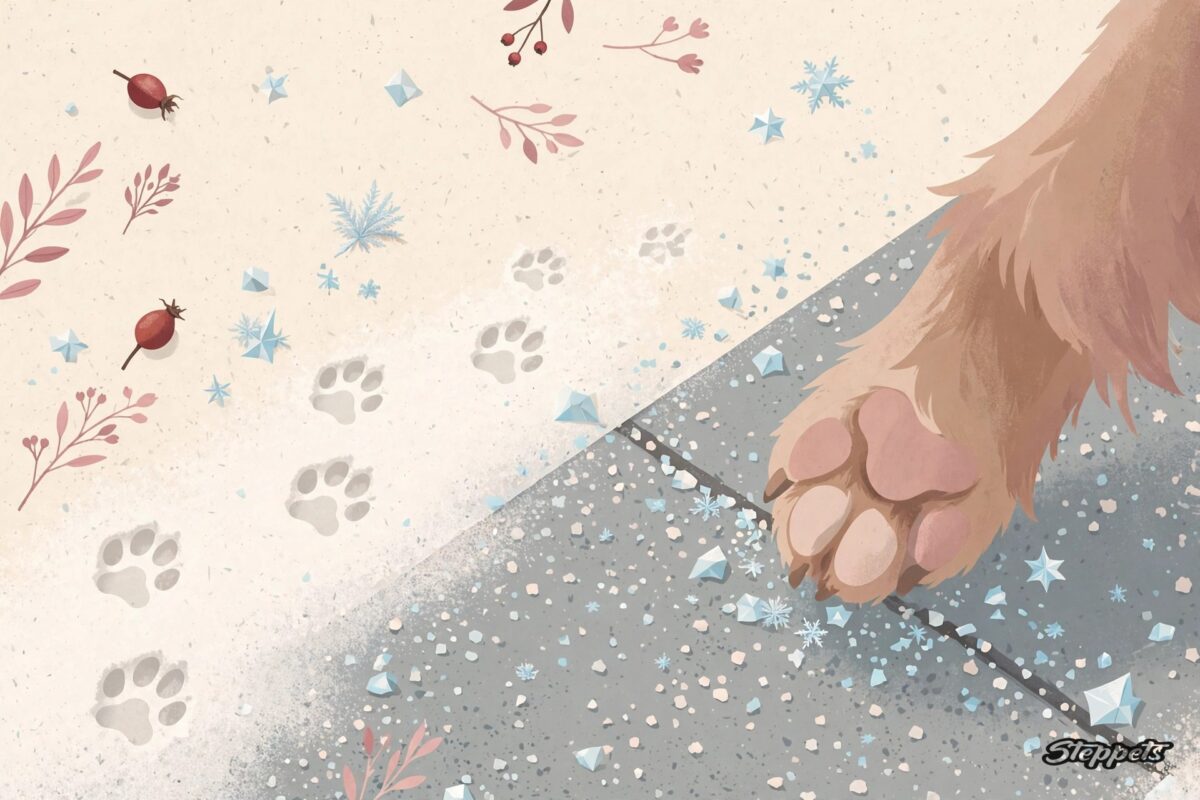
Ice balls between the toes. Snow packs into the fur between the pads, melts slightly from body heat, and refreezes into hard, painful little marbles that make dogs limp mid-walk. Keeping the fur between the toes trimmed short prevents most of it; check paws at the door when you get home.
Wind chill off the St. Lawrence. River corridors, open parks, and the exposed stretches along the water run far colder than the forecast number. Plan winter routes through sheltered, built-up streets on the coldest days and save the river path for calm ones.
Short daylight. In December, both the morning and evening walks happen in the dark. A reflective or light-up collar or leash is not a gadget here — it’s how a driver sees your dog at a crosswalk at 5 p.m. Keep the leash short near intersections; plows and salt trucks don’t stop quickly.
Frozen ground and hidden ice. Dogs slip too, and a senior dog with stiff joints can genuinely hurt himself on black ice you’ll barely see. Walk the sunny side of the street where you can. One more hazard worth naming plainly: puddles of antifreeze in parking lots taste sweet and are extremely poisonous — steer your dog away from any bright or sweet-smelling spill, and call a vet immediately if you think he drank some.
How protection actually helps
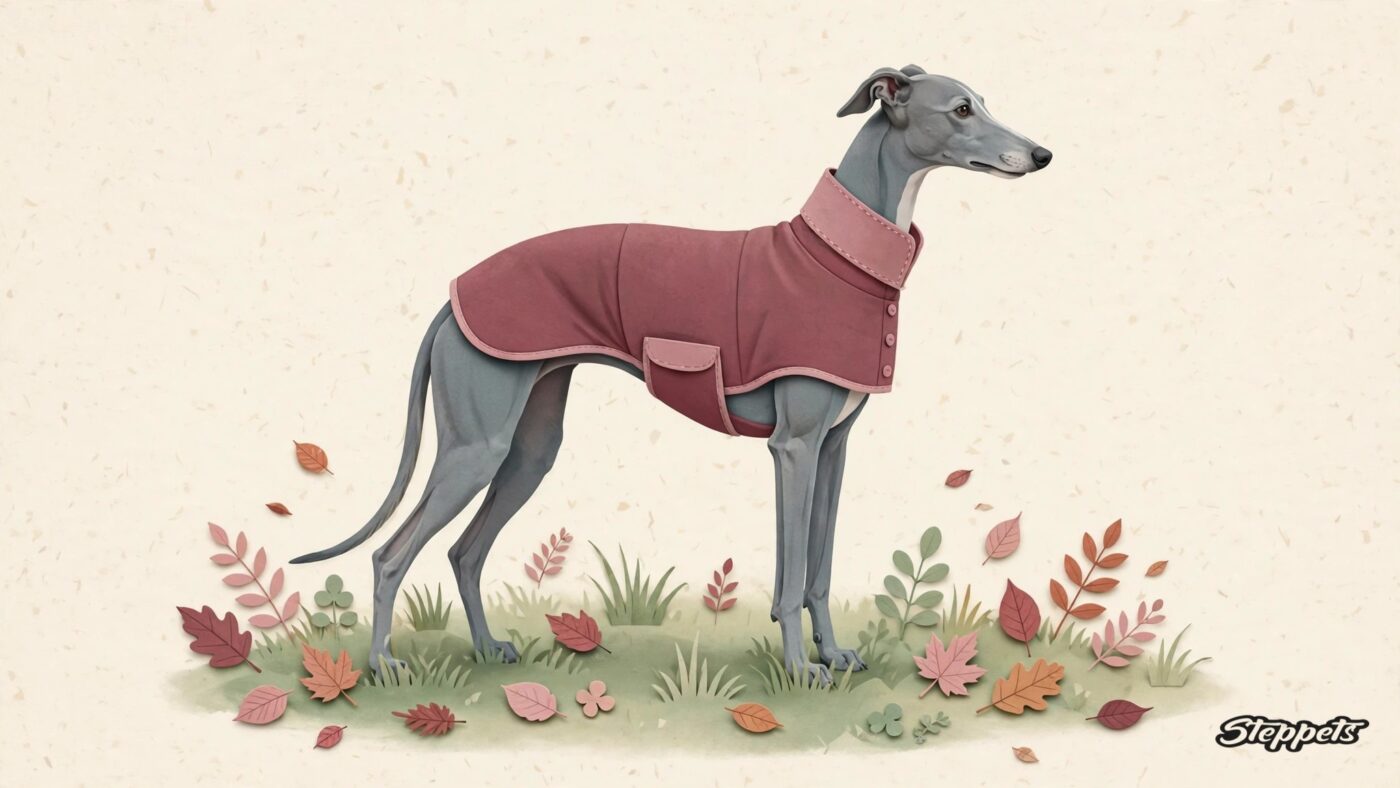
A coat doesn’t make a dog invincible; it buys time and comfort. Covering the core — the chest and back where the major muscle mass is — slows heat loss exactly where it matters most, and a layer against the wind restores what wind chill strips away. Fit is the whole game: a coat that hangs loose lets cold air pump in and out with every step, and one that rubs at the shoulders or neck will be hated by Friday. Coverage should reach the chest without restricting the stride.
How does a coat help a dog in cold weather?
A coat covers the chest and back, where the major muscle mass is, and slows heat loss exactly where it matters most. A layer against the wind also restores what wind chill strips away — the warm air the dog’s own coat traps against the body. Fit decides whether it works: a coat that hangs loose lets cold air pump in and out with every step, while a well-fitted one moves a dog roughly one comfort band warmer.
Ears and neck are the other gap. Ears are thin, exposed, and poorly circulated — a snood or ear cover protects them and seals the neck gap where a coat lets heat escape. Paw care completes the picture: balm (affiliate link) before the walk, a rinse or wipe after, and booties (affiliate link) for dogs who’ll tolerate them on the worst salt days.
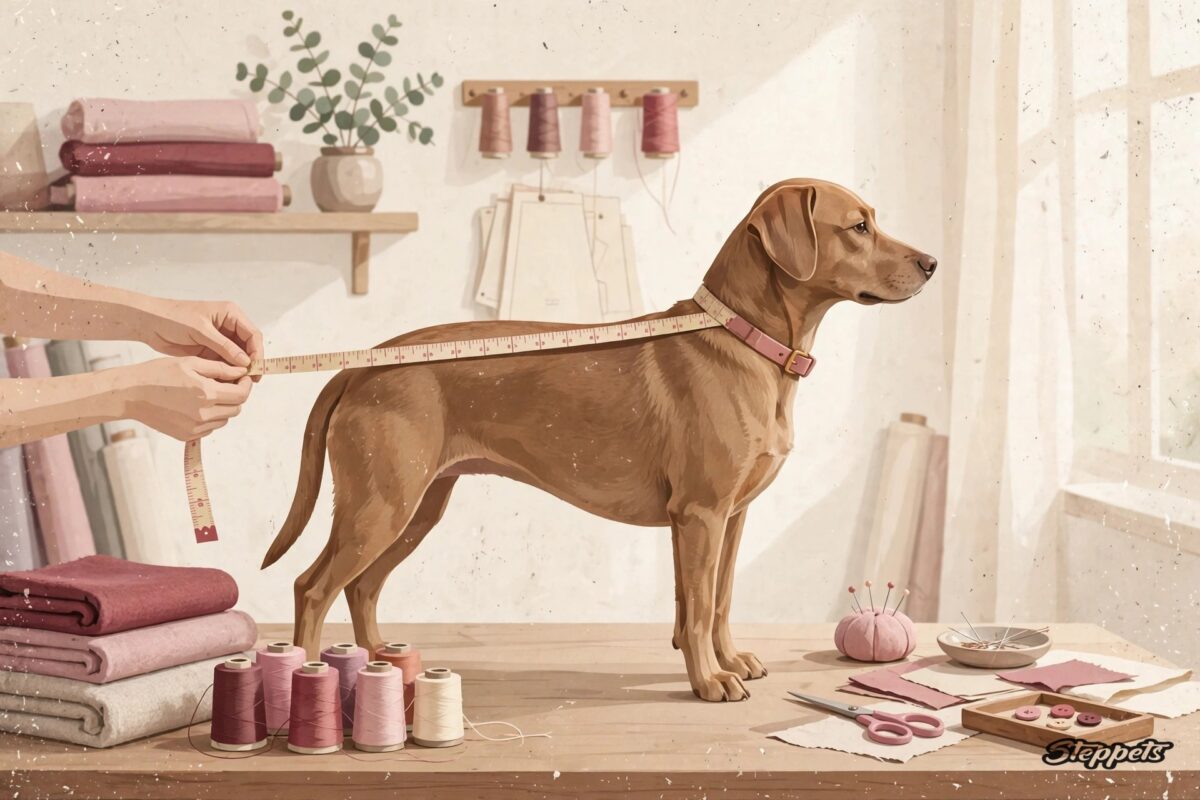
This is the thinking behind our own work. The Griffin coat is made here in Montreal and built for cold Quebec winters, with a wool body and a separate fleece neck section that covers the neck and chest junction a regular coat leaves open. It’s made to measure from five measurements — neck, chest, back length and the rest — because “size medium” fits almost no dog properly. We’re not going to promise you a temperature number for it; no honest coat maker can. What a well-fitted coat does is move your dog one band in the right direction, and on a −12°C evening in Verdun, that’s the difference between a bathroom break and a real walk.
A practical winter-walk checklist
Before you leave:
- Check the temperature and the wind — decide the band, then the route and the time limit
- Coat on for small, lean, short-coated, senior, or young dogs below −7°C; snood for ears on the coldest days
- Paw balm applied, or booties on, if your route is heavily salted
- Reflective collar or leash after dark — which, in December, is most walks
On the walk:
- Keep moving; standing around in wind is when dogs chill fastest
- Watch for the early signs — paw lifting, hunching, pulling for home — and treat any of them as the end of the walk
- Choose sheltered streets over open, windswept stretches on the coldest days
Back home:
- Wipe or rinse all four paws to remove salt; check between the toes for ice balls
- Dry the chest, belly, and ears if he came home wet
- Fresh water, and let him warm up before any big meal or bath
Frequently asked questions
Can dogs walk in −20°C?
Most shouldn’t, beyond a few minutes. Hardy, well-coated breeds in good health can manage a short, protected outing; small, lean, young, old, or short-coated dogs should be on toilet-break-only schedules at −20°C. With Montreal wind on top of that number, the safer call for nearly every dog is a very short outing and indoor exercise instead.
Do dogs feel cold at night?
Yes. A dog sleeping indoors at normal home temperatures is fine, but small, lean, and senior dogs appreciate a bed away from drafts — not directly on a cold floor by an exterior door — and many will happily use a blanket. If your dog curls into the tightest possible ball or burrows under covers nightly, he’s telling you something.
Is snow safe for dogs to eat?
A few mouthfuls of clean, fresh snow in your yard won’t hurt most dogs. Roadside snow is a different story: it’s loaded with salt, grit, and de-icing chemicals, and eating a lot of any snow can chill a small dog and upset his stomach. Discourage it on sidewalks and streets altogether.
Do small dogs get cold faster?
Yes — it’s physics, not fussiness. Small dogs have more surface area relative to their body mass, so they lose heat faster, and their bodies ride closer to the cold ground and the slush. Assume your small dog experiences a given day one band colder than a big dog does, and protect him accordingly.
How long can a dog stay outside in winter?
It depends on the temperature band and the dog. A healthy, well-coated dog at −5°C can enjoy a long walk; the same dog at −18°C with wind should be out for minutes. Unsupervised outdoor time in deep cold isn’t a good idea for any dog. When you’re unsure, choose the shorter outing — you can always go out again later; you can’t undo a chilled dog.
Ready for your dog’s winter?
The real secret to winter with a dog in Quebec isn’t toughness — it’s measuring honestly, dressing the dog you actually have, and knowing when the answer is “not today.” If you want to get the fit right, our Fitting Room walks you through taking the five measurements a made-to-measure coat needs, and it takes about two minutes with a soft tape. And if you’d like more guides like this one — winter care, fitting, and life with dogs in Montreal — join the newsletter at the bottom of this page. Winter’s long here. We might as well get it right together.