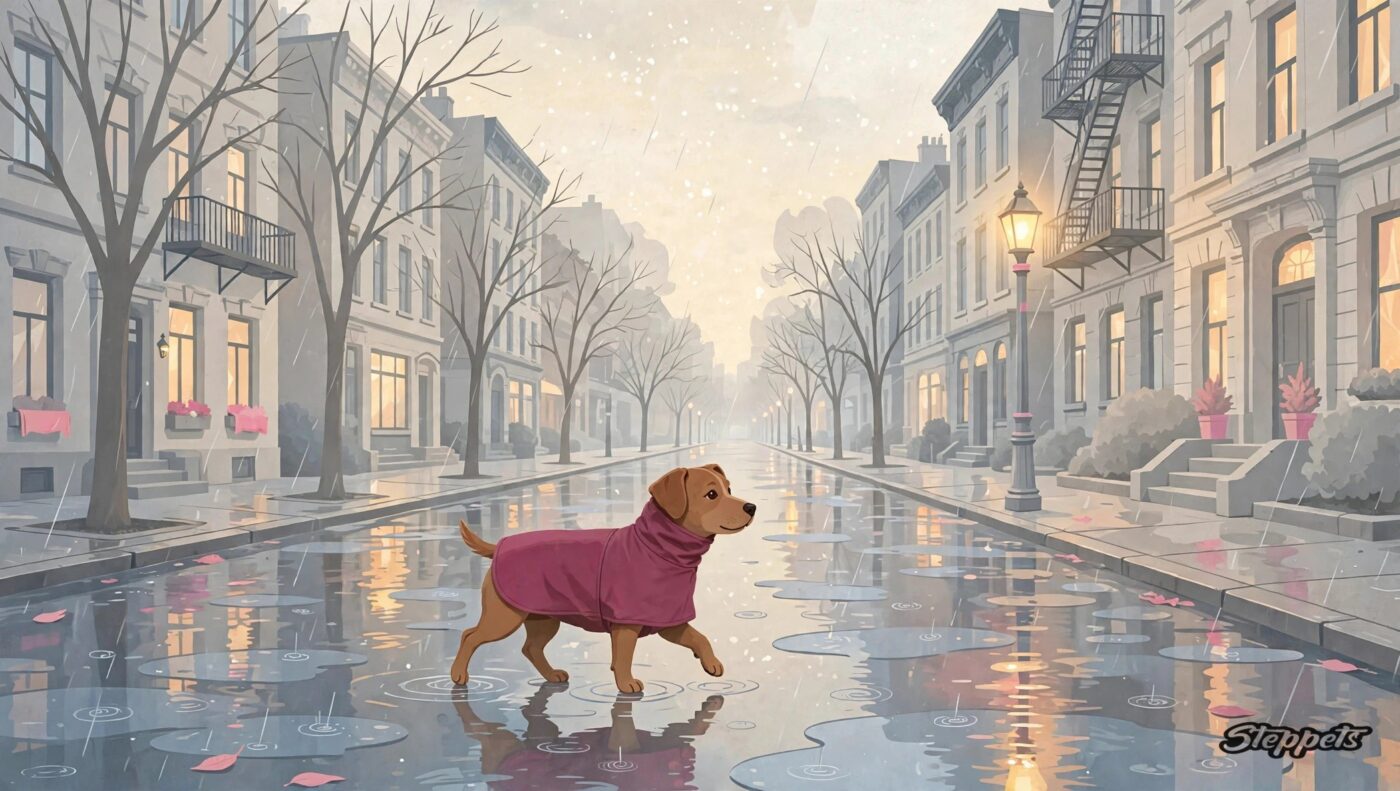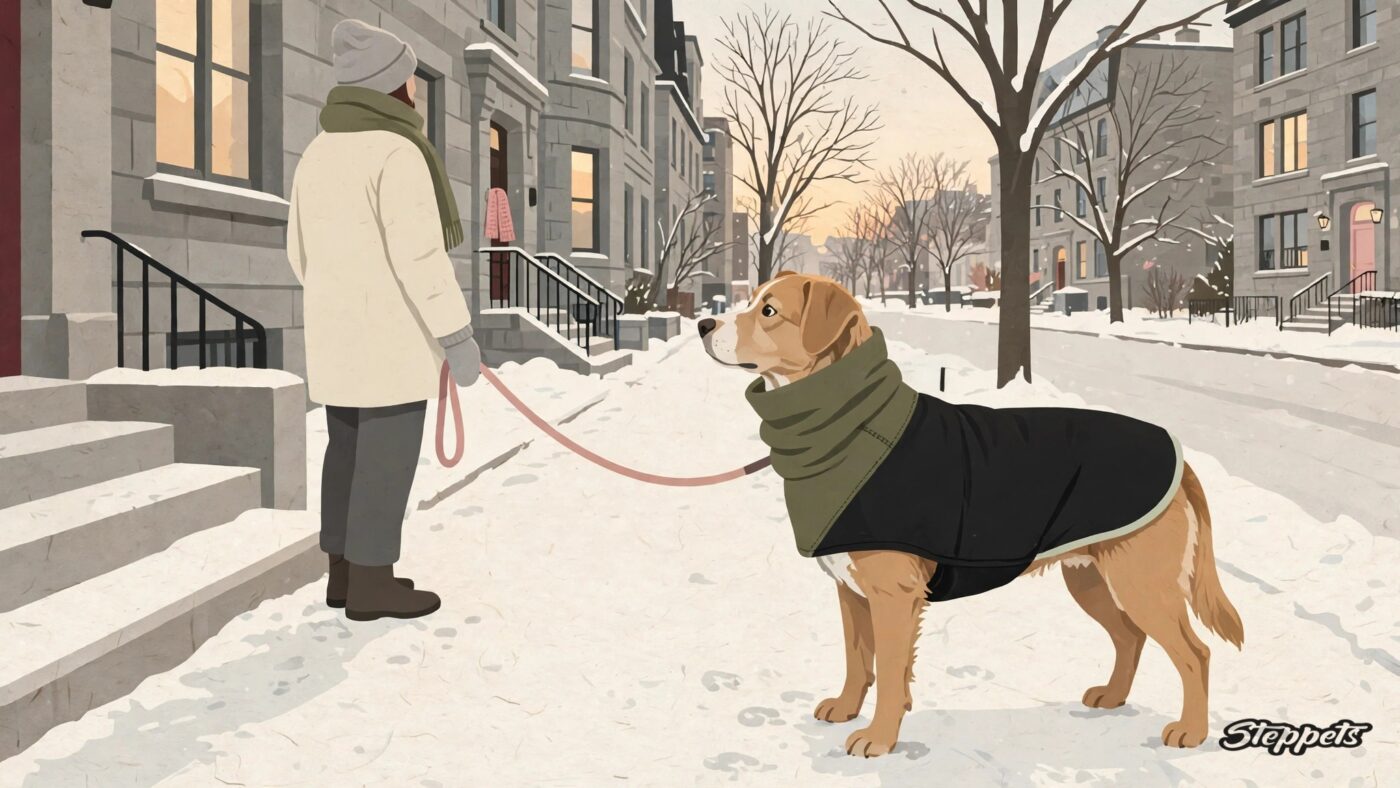
It usually starts at the door. The leash is on, the boots are on you, and the dog who bounded out happily all summer plants his feet on the mat and will not move. Or it starts halfway down the block: he stops dead, stares at you, and pulls for home. And if your dog refuses to walk in winter, the word that comes to mind is stubbornness — he did this fine yesterday, he is just being difficult, he needs firmer handling. That reading is almost always wrong, and it is also unhelpful, because it points you at training when the problem is usually physical. A dog who will not walk is a dog telling you something about the walk. The job is to work out what, and the fastest way is to check the causes in order, from the ground up.
Start with the paws, because the ground changed first
Everything a dog meets in winter, he meets with bare feet. Cold pavement is the mildest version of the problem: a dog’s paws can handle cold ground for a while, but standing on frozen sidewalk at an intersection, or walking through slush that soaks the fur between the toes, chills them fast. A dog who walks fine on a dry cold morning and balks on a slushy one is very often telling you about his feet, not his attitude.
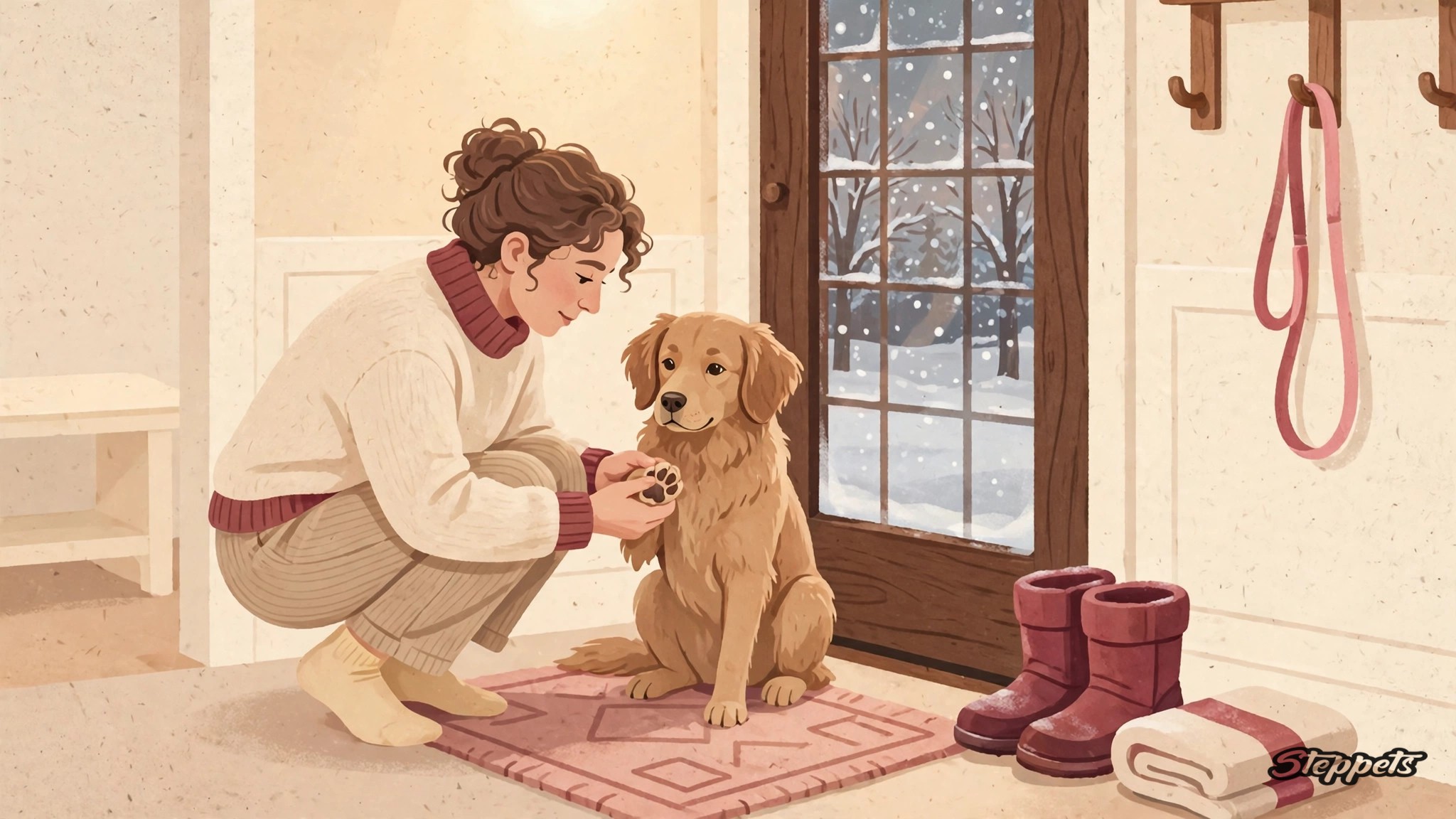
Then there is salt. Montreal spreads de-icer before the snow has even landed, and by mid-November every crosswalk has brine pooled at the curb. Salt dries pads out, dry pads crack, and salt worked into a fresh crack stings with every step. Ice balls are the third piece: snow packs between the toes, melts a little from body heat, refreezes into hard lumps, and the dog is suddenly walking on marbles he grew himself. All three feel the same from the owner’s end — the dog stops — and all three are checked the same way: at the door, before and after the walk, lift each paw and look. Are the pads cracked or raw? Is there salt grit or packed snow between the toes? Does he flinch when you touch a particular paw? Our full paw-care guide covers the salt, the ice balls, and the two-minute rinse routine that should follow every winter walk.
If the paws are the problem, the fix is practical rather than disciplinary: pick routes with packed snow over salted sidewalks where you can, keep the first walks of the season short while pads toughen up, rinse at the door every time, and try a paw balm barrier or booties on the worst salt days — balm before the walk, boots for dogs who will tolerate them. If one paw is consistently the sore one, or the dog limps, that is not a winter problem any more; it is a vet visit, and the walk can wait.
Then check the coat — it may be fighting him
A coat that fits badly is the cause owners miss most, because they assume a coat can only help. It cannot, if it binds. Watch the dog move rather than looking at the coat: does he trot freely, or does his stride shorten the moment the coat goes on? Does the coat pull at the shoulders, ride up over the back, or bunch under the belly? A neck opening that is too tight, a chest strap that sits wrong, or a body that is too long will all make a dog reluctant to walk — and a dog cannot tell you the coat is the problem except by refusing to go out in it.
The test is simple and costs nothing: take the coat off and see whether the refusal disappears on the next outing. If it does, the coat is the cause, and the fix is fit, not training. A coat should let the shoulders move the way they move bare — that is the whole point of measuring the dog rather than guessing a size off a chart. If the coat is new this winter, check the fit against your dog’s actual measurements before assuming the dog is the problem; a measuring guide and the five numbers that matter are on the Fitting Room page. And if the coat is last year’s, remember the dog may have changed: puppies grow, seniors lose muscle, and a coat that fitted in February may not fit in November.
Wind and wet: the dog who walks fine in dry cold
Some dogs refuse only on particular days, and the pattern is the clue. A dog who walks happily at −10 °C, dry and calm, and will not go out at 2 °C in rain and wind is not being inconsistent. He is being accurate. Wet fur loses the insulation that dry fur provides, wind strips away what warmth is left, and evaporation keeps cooling the dog after he is back inside — the wet-cold problem in full. Judge the walk by wetness and wind, not by the number on the thermometer, and on the worst wet-windy days keep it short, put a rain layer on if your dog has one, and dry him properly at the door. A dog who has learned that wet walks end in shivering will start refusing at the door before you have even felt the rain yourself.
Darkness and a landscape that smells wrong
By mid-November in Montreal the sun sets before half past four, which means most winter walks happen in the dark. Dogs navigate far more by scent than by sight, and snow covers the scent map of the whole neighbourhood — the fire hydrant, the hedge, the corner where the other dogs pass. For a confident dog that is a novelty. For a nervous dog, a puppy in its first winter, or a senior whose senses are fading, it is a different world every evening, and refusal is caution, not defiance.
This is also why so many dogs will not pee in the snow. The spot they always use is under snow, the ground is cold on the belly, and the whole business feels exposed and wrong. It is the same refusal with a different trigger, and it resolves the same way: patience, a cleared patch of ground if you have a yard, a familiar route, and time. Puppies in particular need the first winter to be boring — the same short loop, at the same time, until it is familiar — rather than long exploratory walks in the dark.
The check, in order, on your next walk
Do this as a diagnostic, not a battle. Keep the walk short and watch where the refusal happens, because the location is evidence:
- At the door, before you leave: does he balk at the coat going on, or at the threshold itself? Coat balk points at fit. Threshold balk on a dark evening points at the dark.
- On the first salted stretch: does he stop, lift paws, or try to walk on the snow at the edge instead of the sidewalk? That is paws and salt.
- Halfway, in wind or wet: does he slow, hunch, and pull for home? That is cold, and the walk was too long for the conditions.
- Everywhere, all of a sudden: a dog who walked fine last week and now refuses everything may be hurt or unwell. Check the paws, check for limping, and if anything looks off, call your veterinarian before the next walk.
Then change one thing at a time. Rinse the paws and try the same route. Try the walk without the coat, or with a different one. Try a daylight walk on the weekend. If one change fixes it, you have your answer, and you have it without a single training session. If nothing changes, and especially if the refusal came on suddenly or comes with limping, yelping, lethargy, or a change in appetite, stop troubleshooting the walk and talk to your veterinarian. Pain and illness hide behind “stubborn” more often than owners expect, and a vet visit is cheaper than a winter of walks that end in a standoff.
What not to do
Do not drag the dog. Dragging a dog who is refusing because his paws sting or his coat binds teaches him that walks hurt and that you will not listen, which makes the next refusal harder rather than easier. Do not make the walk longer to prove a point — a dog who is cold gets colder, and a dog who is sore gets sorer. And do not skip walks altogether and wait for spring. Winter in Montreal is five months long, and a dog who spends it indoors gets stiff, bored, and worse at walking, not better. The answer is shorter walks, more often, with the cause fixed — not no walks, and not forced marches.
Most winter refusals clear up within a week or two of finding the cause, because the cause was never the dog’s character. It was the ground, the coat, the wind, or the dark — all fixable, all ordinary, all part of the first weeks of winter. Get the paws right, get the fit right, keep the wet-windy walks short, and the dog who plants his feet at the door in November is usually the dog pulling you out the door by December.